Most people don’t contact their insurance company the first time a drain blocks. They’ll try a plunger, pour in a drain cleaner, or call a drainage company to clear it. Even if it happens again a few months later, they’ll often do exactly the same thing. It’s usually when the problem keeps coming back, or when other issues start appearing around the property, that insurance enters the conversation.
That’s because a recurring blockage, unexplained damp, foul smells, flooding, or even signs of subsidence can all point towards an underlying drainage defect. Before an insurer agrees to repairs or progresses a claim, they need evidence. In many cases, that evidence comes in the form of a CCTV drain survey insurance investigation. The important thing to understand is that insurers don’t only arrange surveys when they think the drains are definitely at fault. Quite often, they’re trying to rule drainage out before looking elsewhere.
CCTV Drain Survey insurance claims for recurring drain blockages
By far the most common reason for an insurance drain survey is a blockage that won’t stay fixed. A one-off blockage is rarely enough to raise concerns, as drains get blocked for all sorts of reasons and most can be cleared relatively easily. But when the same drain blocks repeatedly over a short period, it starts to suggest there’s something more going on beneath the surface.
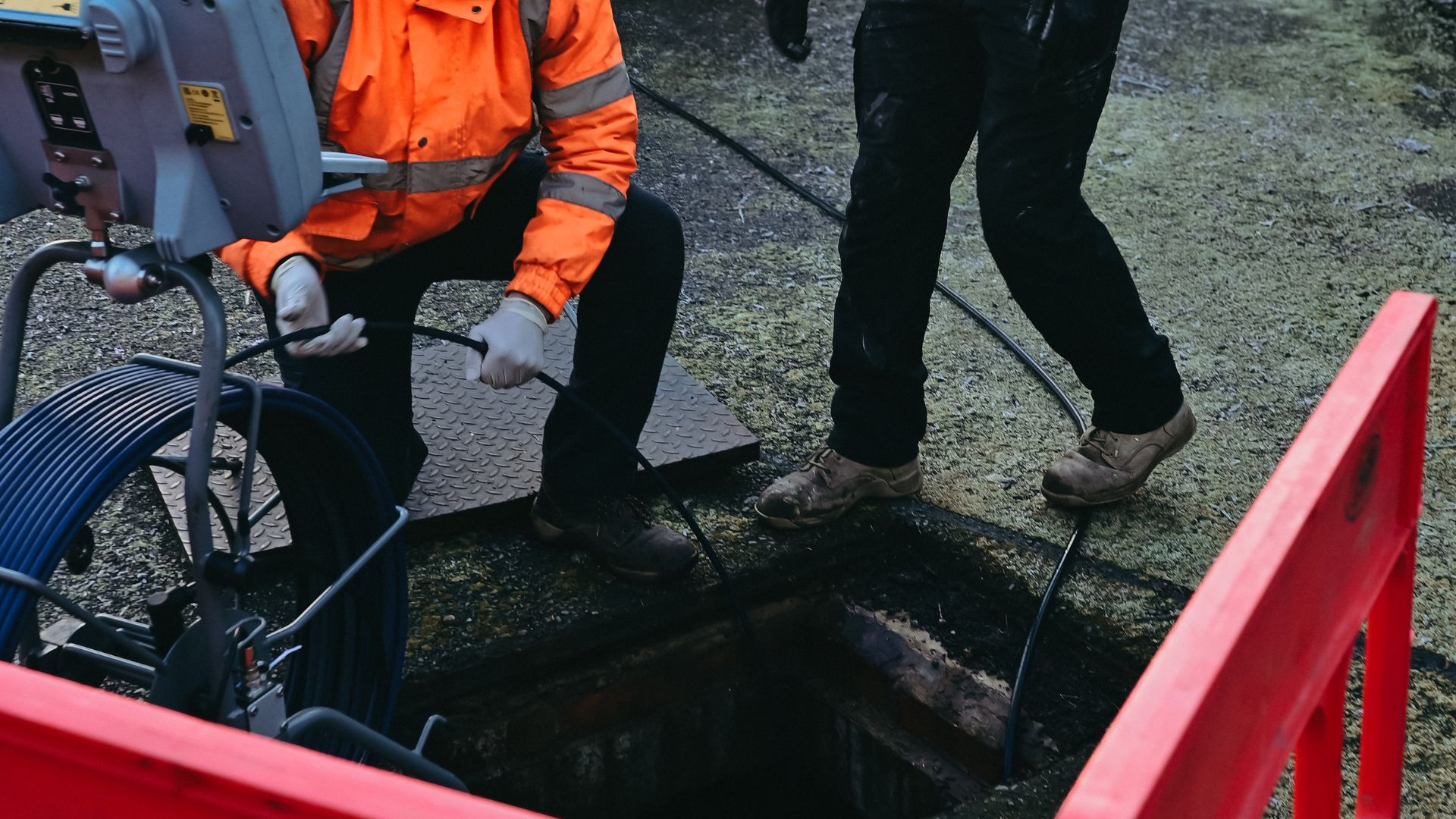
That’s when insurers will often appoint a drainage contractor to carry out a CCTV survey. The purpose of the survey is to identify whether there’s an underlying defect causing the problem. Common findings include root ingress, cracked pipework, displaced joints, or sections of drain that have partially collapsed.
Sometimes, however, the survey reveals no structural issues at all. While homeowners often assume repeated blockages automatically mean damaged drains, that’s not always the case. The CCTV survey provides the evidence needed to determine whether repairs are required or whether the issue has another cause entirely.
Damp, smells, rats and flooding
Blockages aren’t the only reason insurers request CCTV surveys. Drainage contractors are regularly appointed to investigate reports of damp, unpleasant smells, rat ingress, and flooding incidents where drains are suspected to have played a role.
From an insurer’s perspective, this makes sense. Drainage systems are responsible for carrying wastewater safely away from the property, so when something unusual starts happening, they’re one of the first areas worth investigating. The challenge is that many of these symptoms can have multiple causes.
A damp patch might be related to a leaking pipe, a roofing issue, defective brickwork, or a drainage problem. Bad smells could be coming from the drainage system, but they could just as easily be linked to an appliance, ventilation issue, or something entirely unrelated. That’s why drainage investigations often form part of a wider process involving several different specialists.
The CCTV survey helps answer one important question: are the drains contributing to the problem? If the answer is no, the insurer can move on and investigate other possible causes with confidence.
CCTV Drain Surveys and subsidence claims
Subsidence is one of the more complex situations where a drain survey insurance claim may involve drainage investigations. When a subsidence claim is opened, insurers don’t automatically assume the drains are responsible. Instead, they’ll usually appoint a loss adjuster and building surveyor to assess the property as a whole.
The surveyor will look at factors such as the pattern of cracking, nearby trees, soil conditions, and the location of drainage runs around the building. In some cases, they may already have a strong indication of what’s causing the movement. If tree-related clay shrinkage appears to be the likely culprit, they may prioritise soil testing and trial pits rather than drainage investigations. However, if leaking drains are considered a possible contributing factor, a CCTV survey will often be requested as part of the process.
Even where drainage isn’t ultimately identified as the cause of the subsidence, defects found during the survey are typically recommended for repair. Eliminating those defects helps remove any uncertainty and prevents future issues from complicating the claim.
What happens after the survey?
Once the CCTV survey has been completed, the findings are compiled into a report and submitted to the insurer. The report will include details of any defects discovered, supporting images, and recommendations for further action where necessary. The insurer then reviews the findings and decides how to go ahead.
If an insurable drainage defect has been found, repairs may be authorised. If the survey suggests another cause, other specialists may be appointed to continue the investigation.
There are also situations where part of a claim may be rejected. This is particularly common where drainage defects are linked to poor workmanship rather than accidental damage or normal deterioration. For example, drainage that has been incorrectly altered during an extension or renovation project may fall outside the scope of insurance cover. Ultimately, the CCTV survey provides the evidence insurers need to make informed decisions.
Final thoughts
If you’ve had the same drain block several times in a relatively short period, it may be worth speaking to your insurer rather than paying for repeated unblocking visits. An underlying defect could be present and may be covered under your buildings insurance policy. Likewise, if you’re experiencing damp, foul smells, rat activity, or unexplained flooding, don’t assume the drains are necessarily to blame. However, don’t dismiss them either. A CCTV survey is often the quickest way to confirm whether drainage is part of the problem.
And if you’re dealing with a subsidence claim, it’s worth asking the loss adjuster whether a drain survey will form part of the investigation. Even where another cause appears more likely, drainage is often checked to ensure nothing has been overlooked.
For insurers, a CCTV drain survey is ultimately a fact-finding exercise. Sometimes it uncovers serious drainage defects, sometimes it confirms the drains are in good condition. Either way, it helps move the claim forward with evidence rather than assumption
At Smart Drain UK, we carry out professional CCTV drain surveys for homeowners, landlords, insurers, and property professionals across the UK. Get in touch with our friendly team to discuss your requirements.