A CCTV drain survey might look similar whether it’s being carried out at a terraced house or a large warehouse, but the reality is that commercial drainage systems present very different challenges.
From pipe diameters and survey distances to specialist equipment and reporting requirements, a commercial property often requires a different approach to a domestic inspection. While the same drainage principles apply, the scale of the infrastructure can be significantly larger, particularly on industrial sites, distribution centres, and multi-unit commercial developments.
The scale difference
The biggest difference between a residential drain survey and a commercial drain survey is the size of the drainage system itself. Most domestic properties use drainage pipes measuring approximately 100mm in diameter, with some larger systems using 150mm pipework. These sizes are sufficient for handling wastewater from kitchens, bathrooms, and toilets.
Commercial and industrial sites are often on an entirely different scale. Large warehouses, manufacturing facilities, retail parks, and distribution centres can have drainage systems featuring pipes several times larger than those found in domestic properties. In some cases, pipework can reach a metre in diameter or more. This isn’t usually because of increased foul waste. Surprisingly, the wastewater requirements of many commercial buildings are not dramatically greater than those of a residential property. The main factor is stormwater management.
Large commercial roofs generate enormous volumes of rainwater runoff during heavy rainfall. To cope with this, commercial sites rely on much larger downpipes and underground drainage networks. These systems must safely transport significant quantities of water away from the building, requiring substantially larger pipe diameters and drainage infrastructure. When carrying out a commercial drain survey, understanding the drain survey pipe diameter is very important because it determines both the inspection method and the equipment required.
The equipment challenge
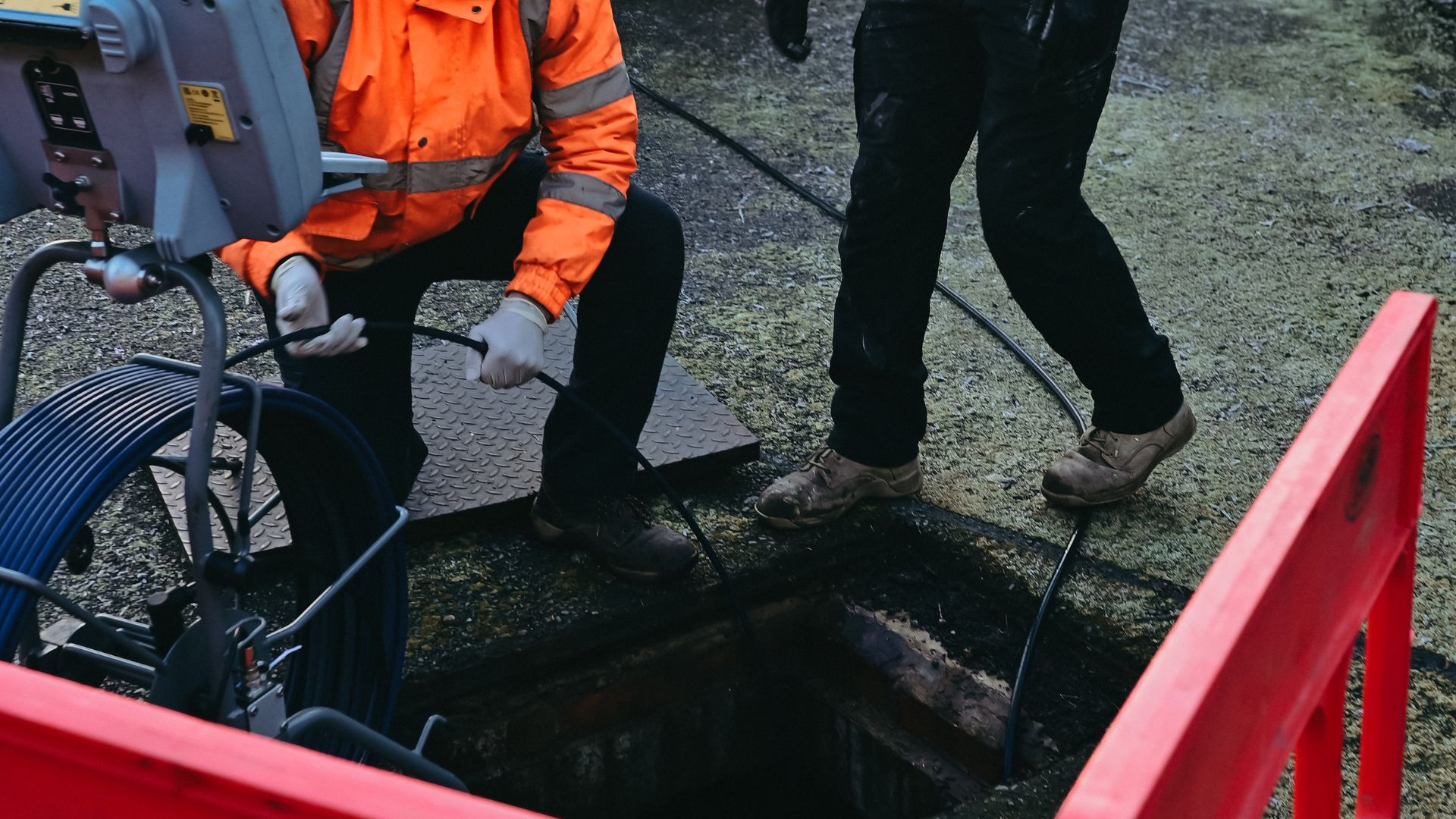
The size of commercial drainage systems doesn’t just affect pipe diameter; it also impacts the distance that needs to be surveyed. A standard CCTV drain camera operates using a cable reel and is highly effective for most domestic inspections. In a residential setting, the distance between access points is typically short enough for a standard push camera to inspect the entire drainage run.
Commercial and industrial properties often present a different challenge. It is not uncommon for there to be 100 metres or more between inspection chambers or manholes. At those distances, a standard push camera becomes impractical because the cable cannot be effectively pushed through the pipe.
For large-scale industrial drain inspection projects, robotic crawler camera systems are often required. These remotely operated units drive themselves through the pipework while pulling the cable behind them, allowing much greater inspection distances and providing stable, high-quality footage in larger-diameter pipes.
When arranging a drain survey for business premises, it’s important to ensure your contractor has access to the appropriate equipment for the size and complexity of the drainage network. At Smart Drain UK, we can bring in specialist equipment as required.
What isn’t different
Despite the differences in scale, the fundamental principles of drainage remain unchanged. Whether inspecting a terraced house or a major industrial facility, drainage systems rely on gravity, flow rates, and correct pipe gradients. Water behaves the same way regardless of the size of the system.
This means that the expertise used during a residential survey directly applies to commercial work. The inspection process, fault diagnosis, and interpretation of findings all follow the same engineering principles. The difference lies not in the science itself but in the scale of the investigation, the complexity of the network, and the equipment required to access it.
Why commercial properties commission drain surveys
The reasons for commissioning a commercial CCTV drain survey often differ from those of residential customers. Homeowners commonly request surveys when buying a property, investigating recurring blockages, or diagnosing drainage-related issues, whereas commercial clients tend to have broader operational and financial considerations.
Property handover and lease agreements
One of the most common reasons for a commercial drain survey is during the transfer of a lease or occupancy agreement. When a business takes on a long-term lease, it is standard due diligence to assess the condition of the building’s key infrastructure. Alongside electrical, plumbing, and gas inspections, drainage surveys help identify existing defects before contracts are signed.
This protects landlords, outgoing tenants, and incoming occupiers by establishing the condition of the drainage system at the point of handover.
Refurbishment projects
Drain surveys are also frequently commissioned before and after major refurbishment works. A survey can confirm whether existing drainage is suitable for the intended use of the property and provide evidence that the system is in good condition following construction activities.
Insurance investigations
Just like domestic properties, commercial premises can experience flooding, blockages, subsidence, and drainage failures. A CCTV survey provides visual evidence that can help support insurance claims, identify liability issues, and decide the most effective repair strategy.
Planned maintenance programmes
Many facilities managers include drainage inspections within routine maintenance schedules. For businesses where operational downtime could be costly, proactive inspections help find developing issues before they lead to significant disruption.
Are commercial drainage upgrades legally required?
A common question from commercial property managers is whether drainage systems must be upgraded when taking over an older building. In most cases, there is no automatic legal requirement to replace or modernise existing drainage solely because of its age. If the system is functioning correctly and is still suitable for its intended use, it may continue to run without modification.
However, many organisations choose to commission surveys and carry out upgrades as part of their own internal standards, risk management procedures, or asset management strategies. For large commercial investments, confirming the condition of underground infrastructure is widely considered best practice.
Final thoughts
While a commercial CCTV drain survey and a residential drain survey use the same inspection principles, the scale of commercial drainage systems introduces unique challenges. Larger pipe diameters, longer survey distances, and specialist equipment requirements mean commercial projects often demand a different approach.
If you’re taking on a new lease, planning a refurbishment, managing a large facility, or simply want greater confidence in the condition of your drainage infrastructure, a professional drain survey for business premises can provide valuable insight and help prevent costly surprises further down the line.
At Smart Drain UK, we carry out both residential and commercial CCTV drain surveys using industry-standard equipment to accurately assess everything from small domestic pipework through to large industrial drainage networks. To speak with a specialist or arrange a survey, get in touch with us today.